American Holidays Inc.
Call: 1-855-663-3888
Email: info@americanholidaysinc.com
American Holidays Inc.
Call: 1-855-663-3888
Email: info@americanholidaysinc.com

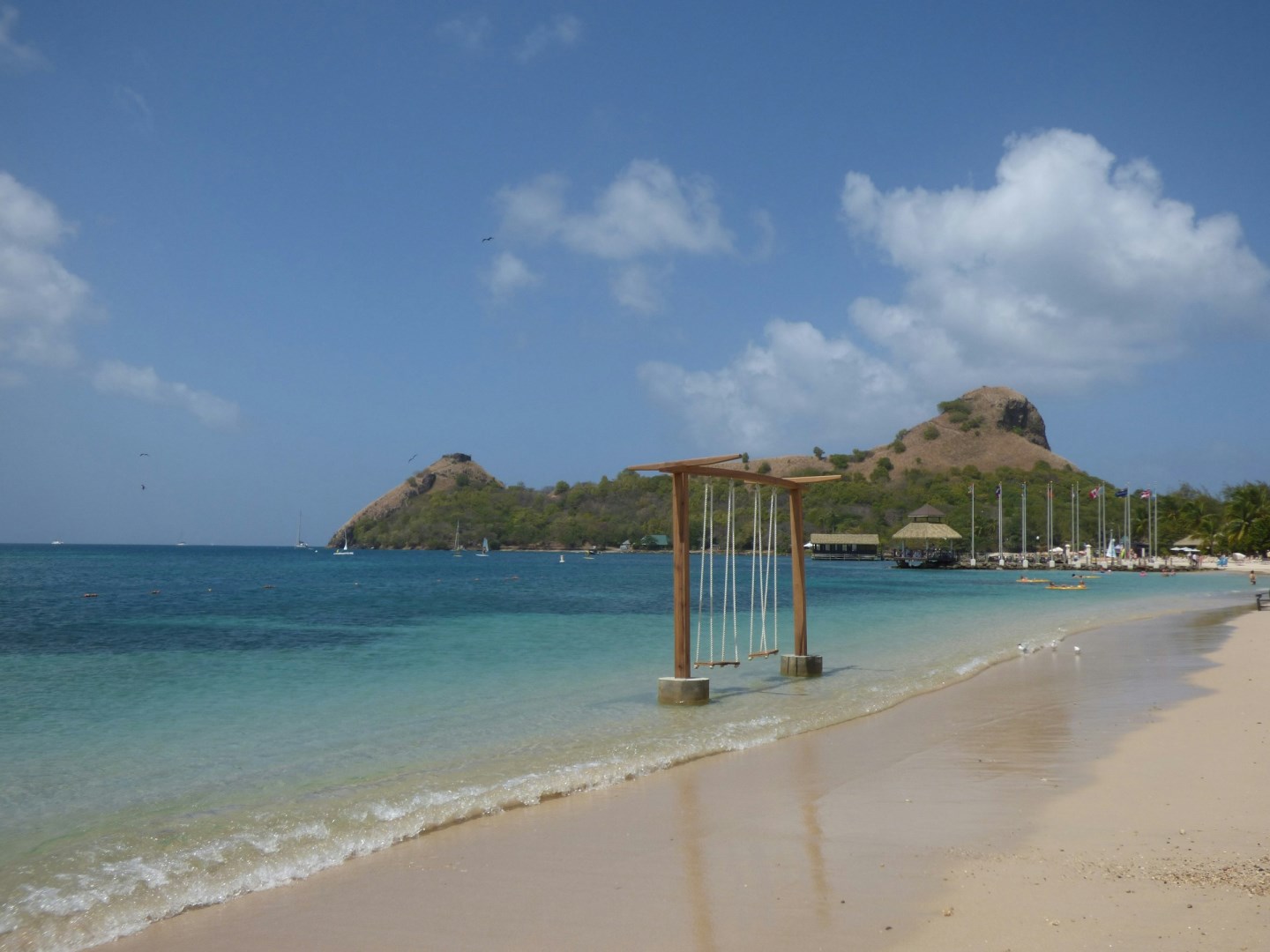
Pigeon Island National Landmark is a historic coastal site on the northwest tip of Saint Lucia, set beside Rodney Bay and connected to the mainland by a causeway. Once a separate island, it now forms part of the island’s northern landscape and combines low hills, dry coastal vegetation, rocky shoreline, and sandy beaches. The site is known for its walking trails and elevated viewpoints, including Signal Peak and Fort Rodney. From the higher ground, visitors can see across Rodney Bay, the Caribbean Sea, Gros Islet, and sections of Saint Lucia’s northern coastline.
Pigeon Island has an important place in Saint Lucia’s military and colonial history. Its strategic position made it useful as a lookout and defensive base during conflicts involving French and British forces. Fort Rodney occupies one of the island’s hills, while the Two-Gun Battery and surviving barracks, stone structures, and military ruins illustrate its former defensive role. The Saint Lucia National Trust maintains a small museum on the site with exhibits and artifacts relating to military history, archaeology, and the island’s heritage.
The landmark also provides access to several natural areas and outdoor activities. Trails lead through dry coastal vegetation to Fort Rodney and Signal Peak, where elevated viewpoints overlook the surrounding bays and sea. Pigeon Island Beach and a second nearby beach offer sheltered coastal areas for swimming and relaxation, while the surrounding waters support snorkeling and marine recreation when conditions are suitable. The combination of historic ruins, hilltop trails, beaches, and coastal views allows the site to be explored as both a heritage landscape and a natural area.
Food on Pigeon Island is centered on casual Caribbean and Saint Lucian fare, with nearby beachside dining complementing the historic site and surrounding recreational areas. Saint Lucian cuisine commonly features seafood, green fig and saltfish, Creole fish dishes, cassava bread, and cocoa-based foods, reflecting African, French, and Caribbean influences. Pigeon Island has also served as a setting for cultural events, including performances associated with the Saint Lucia Jazz & Arts Festival. One distinctive detail is that the island was once physically separate from Saint Lucia; the modern causeway now makes it accessible by road while retaining its character as a distinct historic landscape.